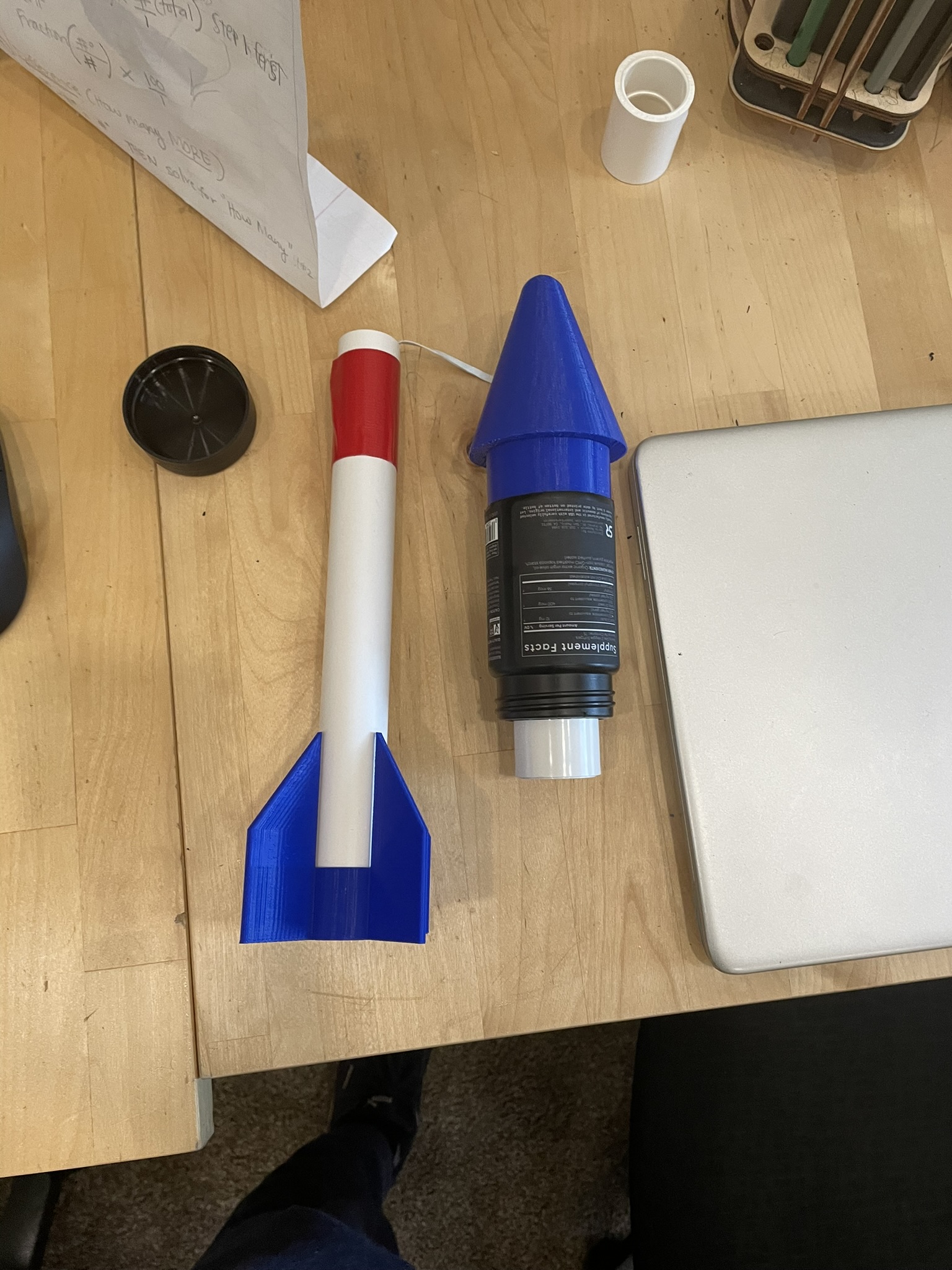
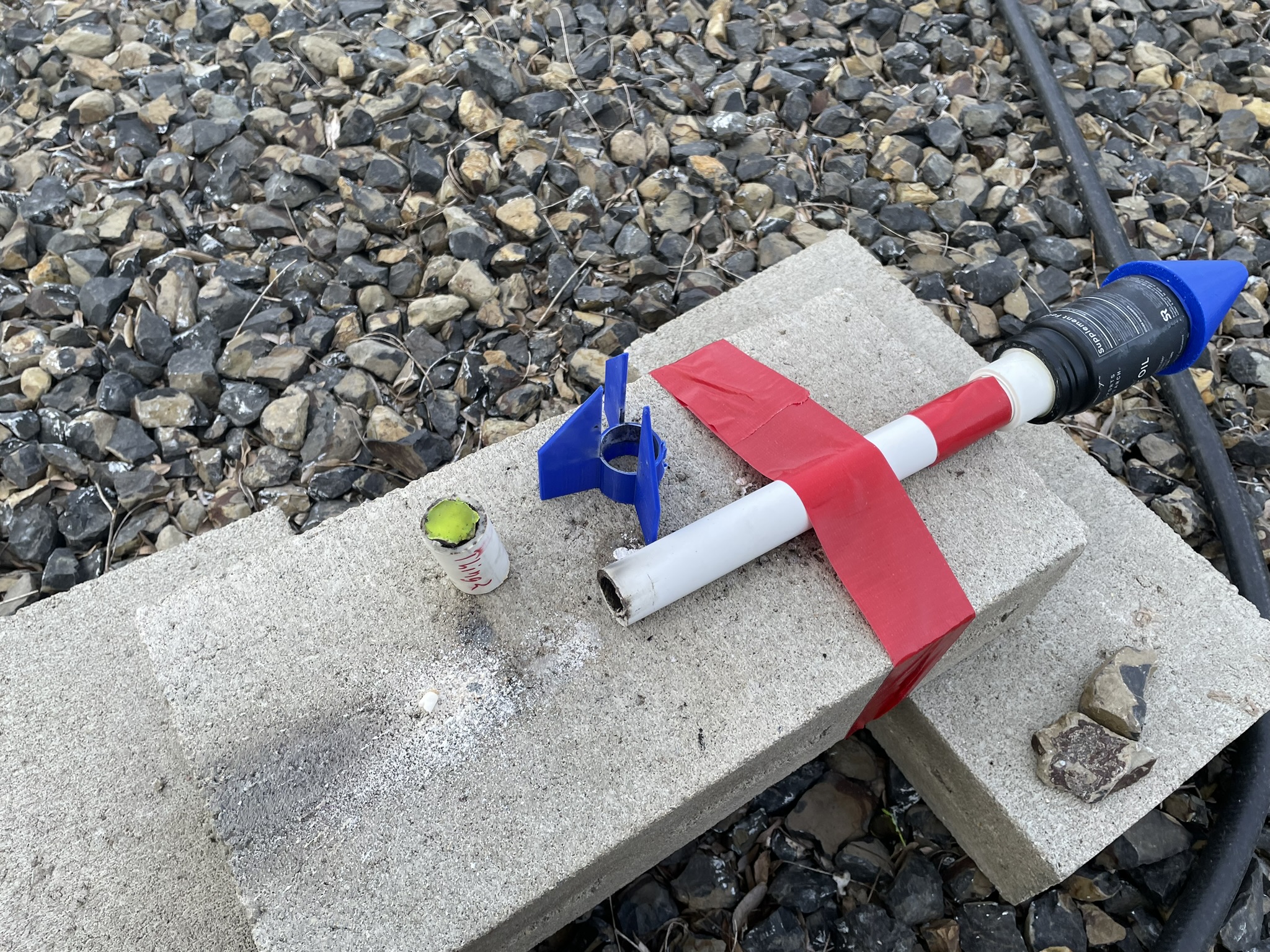
For a few summers I have been involved in sugar rocketry, building and launching rockets through my own research and learning. Sugar rocketry uses a mixture of sugar and an oxidizer, such as potassium nitrate, as a solid fuel packed into a tube to create an engine for launch.
Model
Scratch-Built Rocket Body
I built this model rocket from scratch to launch and test my sugar rocket designs. It includes a nose cone, body tube, fins for stability, and a recovery system designed to bring the rocket safely back down after flight.
Engine
Sugar Rocket Motor
The engine provides the thrust needed for launch. It uses a sugar-based propellant mixture, and in this setup black powder sits above delay fuel to deploy the parachute near the peak of the flight.
Sugar
Acts as the fuel in the propellant mix.
Burns when combined with the oxidizer.
Helps create the gas that produces thrust.
Potassium nitrate
Works as the oxidizer in the engine.
Supplies oxygen so the fuel can burn quickly.
Is one of the most common ingredients in sugar rocketry.
Delay fuel
Burns more slowly after the main thrust phase.
Creates a timed gap before recovery deployment.
Helps the parachute open closer to apogee.
Black powder
Sits near the top of the motor in this setup.
Provides the charge to eject the parachute.
Is used for recovery, not for the main thrust.
Guide
Best Video Resource
This is the most useful guide I have found for learning how sugar rockets are made. It has been the best video reference I have used while researching the process and understanding the overall build.
Launch Data
Rocket Launch Tableau Dashboard
This embedded Tableau dashboard appears to compare rocket launch activity by top agency. I included it as a useful outside visualization because it connects well to the broader topic of rocketry and shows how launch data can be organized interactively.